Posts

The Causes of World War I

Image
The Causes of World War I By Curt Smothers Diagnosing the causes of World War I would be similar to diagnosing the cause of a patient’s embolism that results in a stroke. A stroke is caused by a clot that builds up and obstructs the patient’s blood vessel, with all sorts of bad outcomes for the human body. The bad outcome that was World War I in Europe was caused by a “buildup” of nationalistic grudges, arms races and competition for colonies and a web of alliances and war treaties that sucked everyone into this useless, futile conflict. Nationalism and grudges France in 1914 was still smarting after their loss in a war with Prussia in 1871. The newly united Germany’s prize in that war was the valuable industrial area of the Alsace-Lorraine. The French wanted it back. Meanwhile, the crumbling empire of Austria-Hungary presided over a network of Balkan states with many national and ethnic groups. Problems in the Balkans festered since Austria-Hungary had annexed Bosnia with its minority...
The Causes of World War II

Image
  The Causes of World War II By Curt Smothers Wars begin as a result of immediate as well as long-range causes. World War II was no exception. Its "sparks" were Germany's invasion of Poland in 1939 and Japan's attack on Pearl Harbor in 1941.  Those two events coalesced and gave World War II its truly global aspect as the Axis powers of Germany, Japan, and Italy battled the Allies of the United States, Great Britain, France, and the Soviet Union in an over-six-year bloodbath. Vindictive victors in World War I sowed the seeds Historians, who are much like "reverse fortune tellers," recognize the long- range causes of the War. Those causes were a sad history of shortsightedness on the part of world leaders. For example, the vengeance wreaked on the defeated Germans after World War I sowed the seeds of long-term German resentment towards Britain and France.  The rise of fascism in Germany Harsh economic reparations coupled with a world-wide depression virtually ...

U.S. and Japanese ships in the Battle of Midway

Image
  The U.S. and Japanese Warships that Fought the Battle of Midway By Curt Smothers When Japan decided to send its 185-ship task force to wrest control of the Pacific Island of Midway from the United States, no one would have bet on America’s 28-ships to turn back the tide of Japanese conquest. But that is exactly what happened, and it occurred for a number of reasons:  (1) an overly complex battle plan on the part of Japanese Admiral Yamamoto that included an invasion of the Alaskan Aleutian Islands, (2) separation of the Japanese battle force kept much of his non-carrier force in reserve and out of the fight, and  (3) better military intelligence on the part of U.S. Navy ♦ The mismatch of forces ◊ Japan (185 ships) The Japanese deployed 4 carrier divisions: Akagi, Hiryu, Kaga, and Soryu ; 11 battleships, including the top-of-the-line Yamato ; and a large assortment of heavy and light cruisers, destroyers, submarines and various support ships. Admiral Yamamoto w...

Events Leading to the Battle of Midway

Image
Events Leading to the Battle of Midway  by Curt Smothers Author's note: I am a retired Navy aircraft carrier sailor. My final service at sea was on board the USS Coral Sea, a carrier named for the battle that preceded Midway. Both Coral Sea and Midway were places where the Japanese naval onslaught was turned back. From those battles forward,   Japanese  Admiral Yamamoto undoubtedly knew that Japan could not defeat the United States. What follows is a chronology of events that marked the turning point of the war in the Pacific. Japanese looked for a knockout punch at Midway In May of 1942, just five months after their Pearl Harbor surprise attack, the Japanese launched what they hoped would be another coup in the Pacific: to take the island of Midway from its American defenders and establish a western base for further dominance of the Pacific. The Japanese hoped to lure the smaller American Pacific Fleet (still reeling from its Pacific losses) and deal the Americans a...

The Pearl Harbor Attack, December 7, 1941--a Time Line

Image
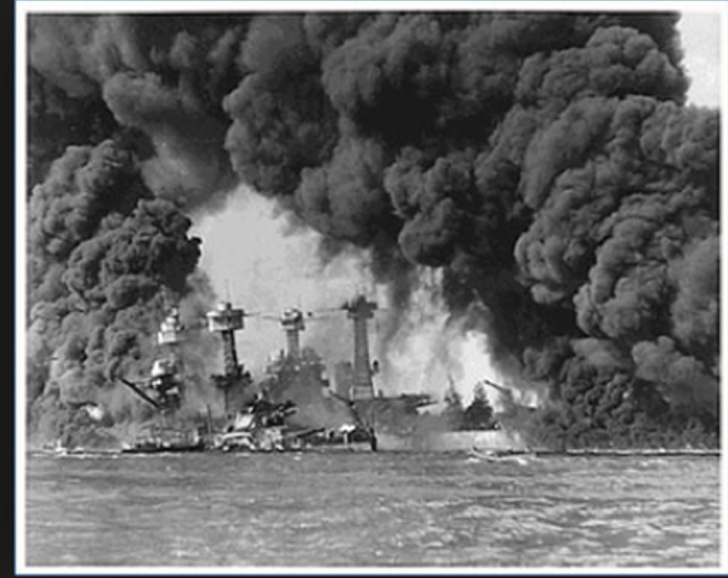
  A Timeline of the Japanese Raid on Pearl Harbor By Curt Smothers At five minutes until 8 a.m. on December 7, 1941,  Japanese bombers and torpedo planes began a coordinated attack of  U.S. military ships at Pearl Harbor and the Army Air fields at Wheeler Field and Hickam field.   The attack was over by 10 a.m. when all but 29 of the over 180 Japanese war planes rendezvoused and headed back to the Japanese carriers, which departed for Japan at 1 p.m. on that fateful Sunday. National Geographic’s web page Remembering Pearl Harbor: Pearl Harbor Time Line   is an excellent resource that recounts in detail  the events of December 7, 1941. The following is an excerpted summary of the important events of that day: ♦ 7:40 a.m. – The first wave of Japanese planes (49 high-altitude bombers, 51 dive-bombers, 40 torpedo planes, and 43 fighters) headed for Pearl Harbor through cloudy skies homing in on an Oahu radio station. ♦ 7:49 a.m. – Japanese attack command...

A Short History of the Buffalo Soldiers

Image
  A Short History of the Buffalo Soldiers By Curt Smothers Army General “Black Jack” Pershing knew good soldiers when he saw them. During 1895-96 he served with the U.S. Army’s 10th Cavalry, an all-black unit in the wilderness of Montana.  Later, while on U.S. border duty and running after Pancho Villa, Pershing also commanded a group of “Buffalo Soldiers,” whom he praised and treated with professionalism, courtesy and concern for their welfare.  (He got this nickname "Black Jack," which was really a racial slur at the time, from his close association with segregated black soldiers.) Who were the Buffalo Soldiers and how did they get their name? The Buffalo Soldiers were four regiments of all-black infantry and cavalry (two each). After the Civil War in 1866, Congress reorganized the U.S. Army and expanded the number of regiments to include these segregated units commanded by white officers.  Where they got the name “Buffalo soldiers” is somewhat in dispute. Some say...

The Causes of the American Revolution

Image
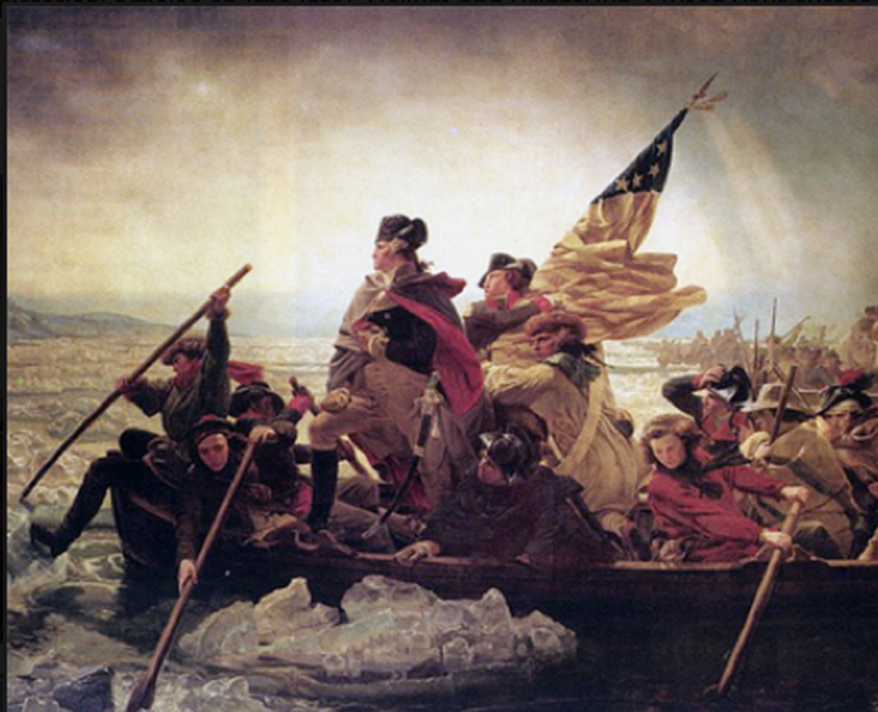
  The Causes of the American Revolution By Curt Smothers The immediate causes of the American Revolutionary war were the skirmish at Lexington and the battle Concord, Massachusetts.  A force of about 700 British soldiers was headed for Concord on April 19, 1775, and they intended to confiscate the weapons stores held by rebellious colonists. The British officer in charge shouted, "Disperse, ye rebels!"  Instead, the rebels resisted and the Revolutionary War had begun.   A short skirmish and Lexington (on the way to Concord) followed by a pitched battle where 300-400 minutemen took on and routed a larger force of British regulars began what would be a six-year struggle for independence.   Underlying tensions between colonials and the mother country The not-so-immediate causes of the American Revolution, however, date back two years before "the shot that was heard around the world."The final plunge into revolution began when the British Parliament passed the hated...

Create a Basic FileMaker Pro Application

Image
Creating a FileMaker Application is the first step to becoming a FileMaker Pro Developer FileMaker pro is a robust and stable platform for database developers. Want to take the first steps in developing customized databases for potential customers? First, you need to master the techniques of creating a customized database application.  This article assumes that you have at least a basic knowledge of FileMaker database design -- its tables, layouts, scripts, calculations, navigation buttons, etc. If not, you should visit the FileMaker Pro resource center and run the tutorials. You will need to have your database ready before you can delve into making your first customized application. Why create an application? Let's assume that you are an experienced FileMaker database user. You have created a useful database to keep track of your extensive stamp collection hobby and business. You have thousands of data entries and have created multiple tables -- one for stamps, one for dealers, on...